Skip to content Skip to main navigation Report an accessibility issue
tables with chairs lined up in rows facing projector with multiple monitors on wall to students' left

UT Medical Center Nursing Building 116A – Departmental Classroom

This is a departmentally-owned room. OIT can offer some assistance with learning the technology in this classroom, but because this is a departmentally-controlled space, we are not able to offer full assistance. Information on this page may not be completely accurate and may be outdated due to department updates.

Note: If rooms 116 A-D are combined into one room, choosing the student displays will show the same image in all four rooms. If the rooms have the walls closed, choosing student displays will show only items for that room.

Classroom Access button with icons for map, listening, wheelchair access, and classroom photos

Your Room Contains

Classroom Resources:
Instructor Resources:
  • Control Panel: None
  • 1 Document Camera(s) with LCD Controls
  • 1 Cynap Pro(s)
  • Cables:
    •  HDMI cable(s)
    •  USB-C Cable(s)
Instructor Screens:
  • 1 Podium Monitor(s)
Audience Screens:
  • 4 to left of students Wall Monitor(s)
  • 2 one at front and one at back Ceiling Projector(s)
Audio Visual:
  • 1 Camera(s)
  • 1 Lapel Microphone(s)
  • 1 Handheld Microphone(s)
  • 1 Gooseneck Microphone(s)

How To...

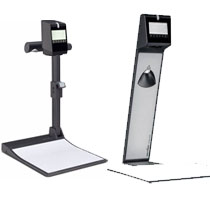
LCD Document camera styles

The document camera located in your classroom allows you to easily display documents, objects, and simple demonstrations to an entire classroom and/or lecture hall.  

Key Features:

  • LCD touchscreen with menus to adjust your image
  • Freeze frame, which freezes the image displayed through the projector system
  • Split screen feature allows you to first freeze your image using the Freeze frame feature, then split the screen to show the frozen image side-by-side with a live image
  • Rotate camera 90 degrees. Allows you to rotate the camera to demonstrate something too large to fit on the document camera table.
  • Zoom wheel, which allows for closer details of the images or objects being projected
  • Continuous auto-focus that adjusts as you zoom in and out to keep your image in clear focus
  • A brightly lit working surface
  • Loop-pull up for easy setup

How to Use the Document Camera:

  • Lift up the document camera with the loop-pull and the camera should automatically turn on.  If it does not, the power button is on top of the head of the document camera.
  • Place your document or demonstration on the working surface 
  • Ensure auto-focus is enabled to have a continuous clear presentation  

Other Resources:

Watch a video on the basic steps to using the Document Camera.


These instructions will help you to connect a device to the Cynap Pro.

Go to our Cynap page in the Technology Training section for more advanced features of using Cynap.

Connecting Your Laptop Wirelessly:

  1. Connect your laptop.
    • On Windows: 
      1. Use the Windows Key + K Key to bring up the Project menu.
      2. Choose Connect to a wireless display
      3. Choose the Cynap for your room. 
    • On MacBook: 
      1. Select the Screen Mirroring icon in your menu bar to see available devices. 
      2. Select the Cynap for your room. 
  2. Enter the 4-digit code that appears at the top of the Cynap screen on your laptop. Your laptop will appear on the Cynap screen. 

Use these steps to display a device that is hooked up using an HDMI cable; this includes the document camera or a laptop.

Room Technology
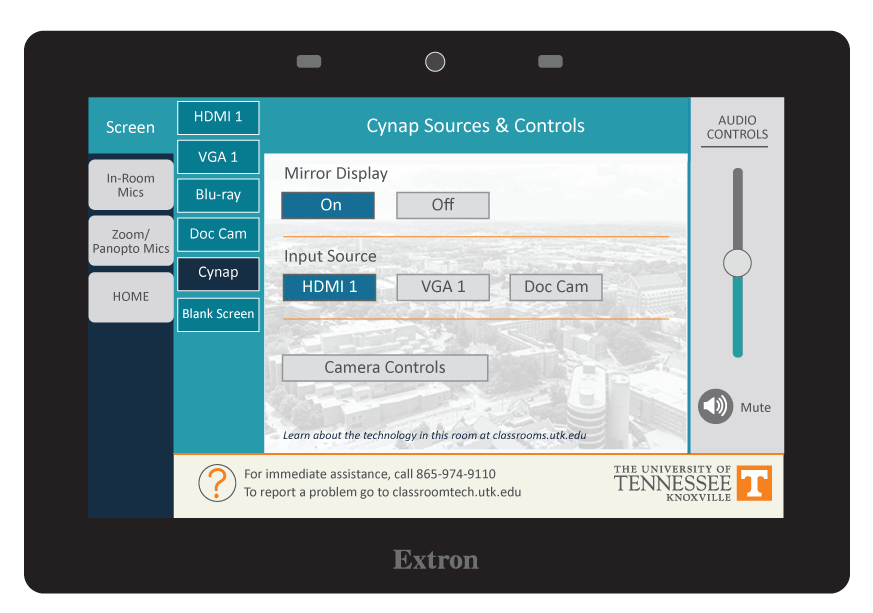
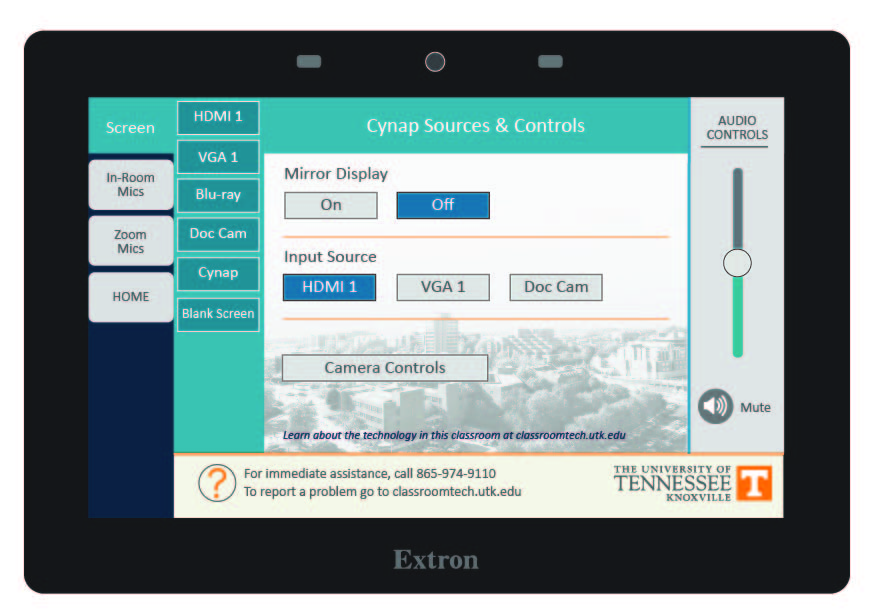
1. On the Control Panel under the Cynap Input menu, select the device you want to display from the Cynap onto the projector. You can select from your document camera, laptop connected with HDMI or VGA, or Blu-ray player.
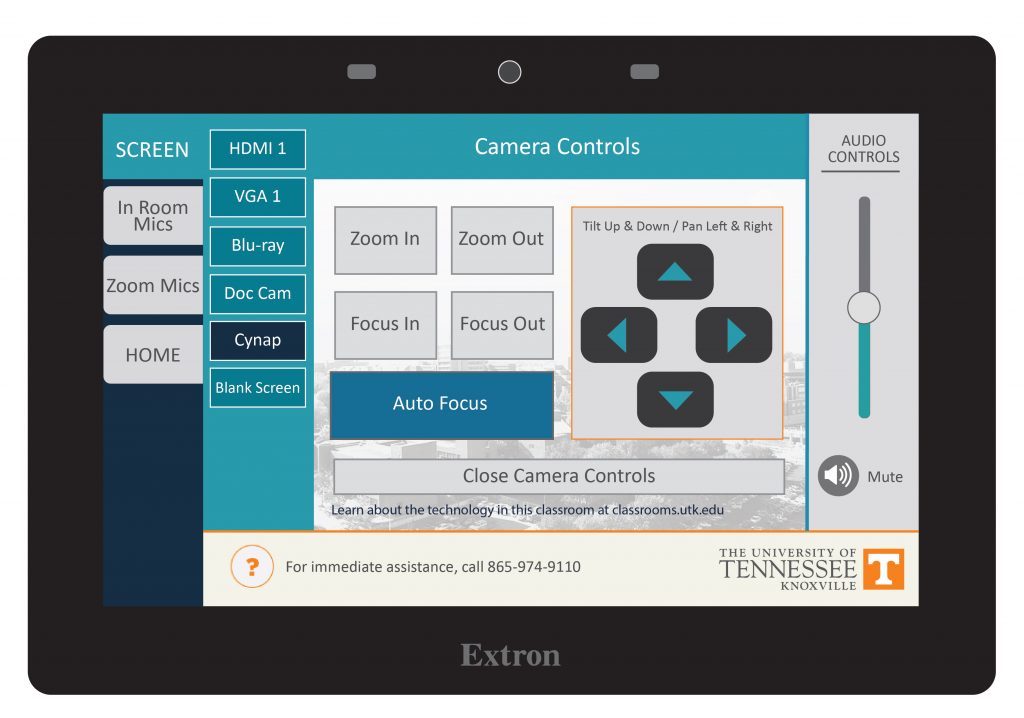
Note: Your control panel may look different than the image on the right.
example of control panel MicrosoftTeams-image-1.jpg
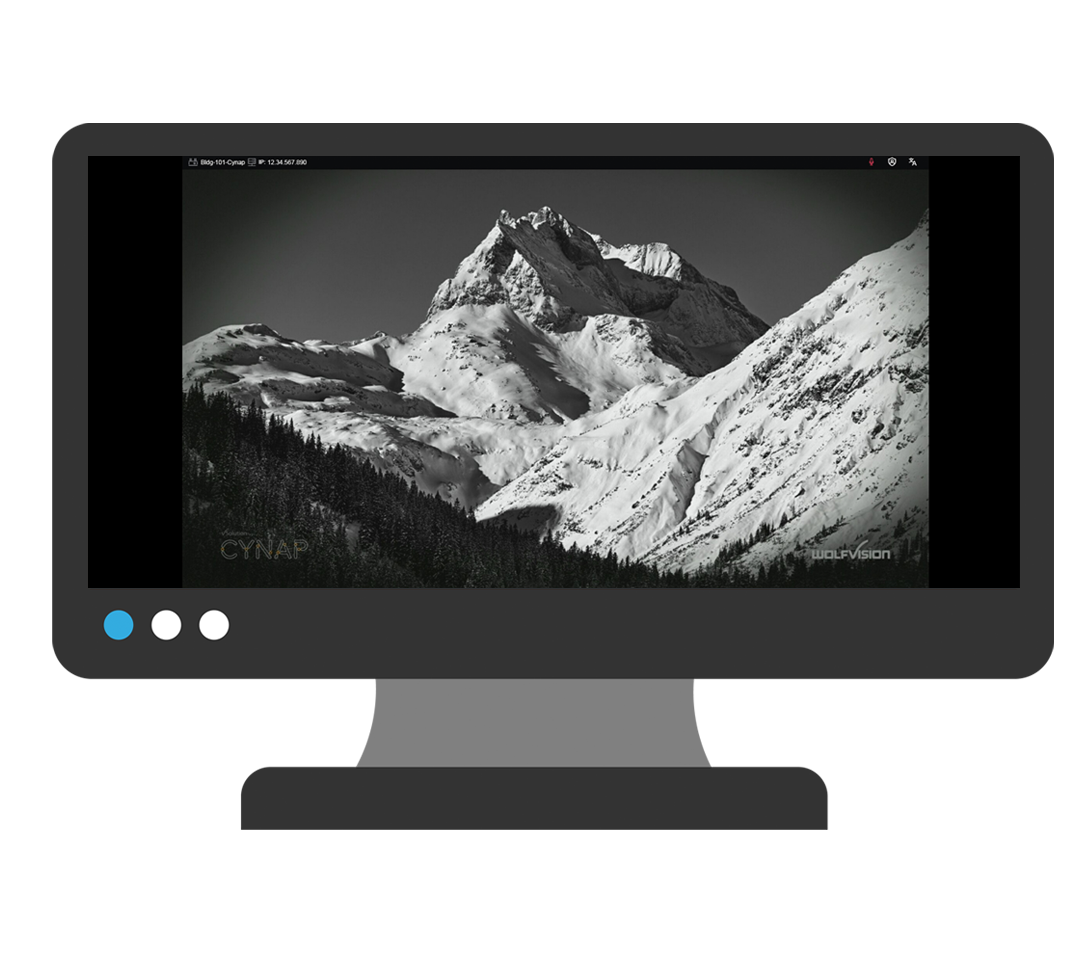
2. On the Cynap screen, tap the screen and select the [ + ] button.instructor podium monitor showing Cynap
3. On the Cynap screen, tap the screen and select the [ + ] button.plus sign from Cynap
4. Then, select Cynap Input to add the device previously selected on the Control panel. This icon may be labeled slightly differently, such as Input or HDMI (even if you are connected another way such as USB-C).picture of the cynap input icon
5. Your selected device will appear on the Cynap screen. If you are not in mirror mode, where the instructor screen is mirrored on the main screen, you can send the image over to the main projector screen by tapping the bottom menu of the window on the Cynap and choosing the Send to Projector button.
Note: OIT recommends using Mirror mode to make things simpler. If you use Mirror mode, make sure you go to your home screen on the control panel and turn the system off, then turn the system back on at the beginning of class. This will reset your PIN code for Cynap so that previous users will not have the PIN code.
mirror mode on control panel under Cynap
6. Note: If you are recording using Zoom or Panopto on a Cynap Pro, you will need to select the shared image - the input image you are recording - and then maximize that window in order to view it on the projector screen. picture of the cynap input iconCynap Screen enlargement icon

The camera in your classroom can be controlled by the Control Panel in your room. You should see a Camera control button on the panel. This is usually under the Cynap menu. On this button, you can pan, tilt, and zoom in with your camera. In some classrooms, cameras may have preset controls that will move them to a set spot and zoom. Try out the controls available to you in your room.

Tip: if you are zoomed in, the pan and tilt will be more pronounced. Zoom out to have more control over the movement of the camera.

These cameras are set up to use with Zoom or Panopto, which you can access through the WebRTC app on your Cynap.

example of control panel

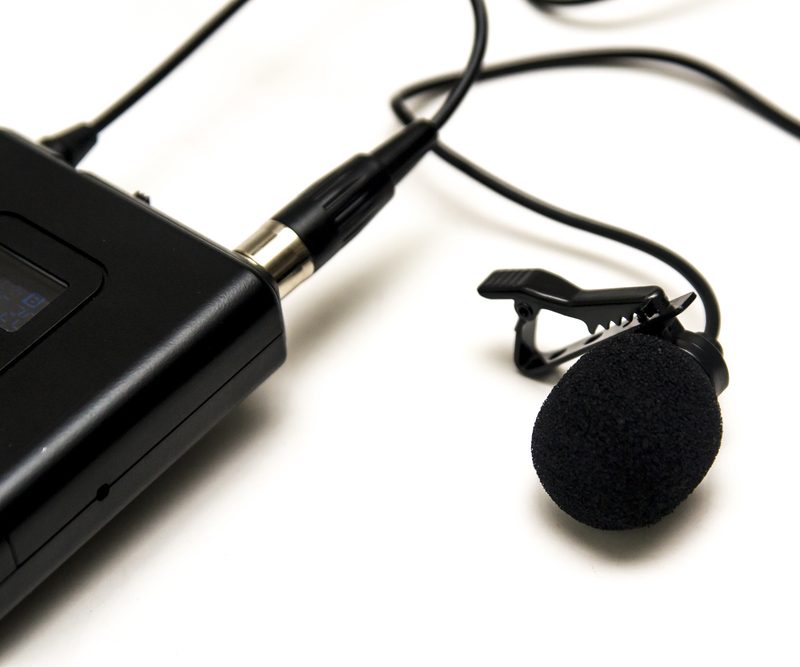
Lapel-style microphones are called Lavalier mics. Lavalier microphones are clipped to your shirt about 3-6 inches below your chin and come with a battery pack you can clip to a belt or slide in a pocket.

Tip: Adjust sound levels by going to the tab for in-room mics or microphones on the control panel. You can adjust the sound level for when you use Zoom or Panopto by going to the tab for Zoom/Panopto mic.

Each mic has been programmed to work with the audio system in your classroom. These mics will not work in other rooms because they have not been set to work with another room system and may also be incompatible with some of the equipment in that room. Please contact OIT if you need additional mics in your classroom.

Tip: when you switch the battery pack on, if the light is green, the battery charge is good. If the light is red, the battery is getting low.

To change the battery on this microphone, look for the small tab either on the side or bottom of the battery pack. Mics will take either D or AA batteries. These batteries should be available in the cable drawer of your podium. If you do not have batteries and need some immediately, contact the emergency line of the OIT HelpDesk at 865-974-9110. If you wish to just report that the room needs batteries for next time, please contact the main number of the OIT HelpDesk at 865-974-9900.


Handheld microphone

Handheld mics can be used by audience members as a to be heard better in the classroom or during a Zoom meeting or Panopto recording. Depending on the set up of your particular room, the mic may only be used either in the room or on Zoom or Panopto. Check your control panel to see what mics are available in Zoom or Panopto by choosing the Zoom/Panopto option. To check what mics are available over your classroom speakers, check the Room Audio button on the control panel.

If your mic needs batteries, unscrew the microphone from the base to add batteries. Mics will take either D or AA batteries. These batteries should be available in the cable drawer of your podium. If you do not have batteries and need some immediately, contact the emergency line of the OIT HelpDesk at 865-974-9110. If you wish to just report that the room needs batteries for next time, please contact the main number of the OIT HelpDesk at 865-974-9900.

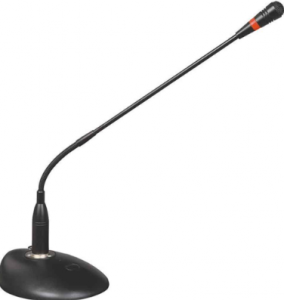
Gooseneck microphone

Available in some classrooms on the podium, these bendable microphones allow a speaker to stand at the podium to be heard. Speakers who are soft-spoken may need to lean in towards the microphone in order to be heard better.

If a lavalier (lapel-style) microphone is available in the room, OIT recommends using that microphone if the speaker wishes to move away from the podium and around the room.